

To Err Is Human. But At What Price?
A root canal can fail.
An implant can fail.
A crown can fracture.
A root can crack years after treatment.
Even the most carefully planned and meticulously executed dental treatment remains subject to biology, healing, patient factors and time.
No dentist—whether in India, the UK, USA, Europe, the Middle East or Japan—can honestly promise that a tooth will never become re-infected or that an implant will function indefinitely.
Medicine is science.
Healthcare is probability.
Yet increasingly, healthcare professionals seem to be paying an extraordinary price for outcomes that medicine itself recognises as possible complications.
Across the world, investigations have become longer, public scrutiny harsher and professional consequences heavier.
Failed root canals, fractured roots, implant failures, screw loosening, peri-implant disease and patient dissatisfaction may lead to complaints, litigation and years of regulatory examination.
Sometimes appropriately.
Sometimes not.
Because a complication is not automatically negligence.
The distinction matters.
Consider a simple example.
During an extraction, a patient may accidentally swallow a tooth or a fragment.
This is uncommon but recognised in clinical practice.
The appropriate response is not denial or panic—it is protocol.
Assess the patient.
Determine whether aspiration or ingestion is suspected.
Arrange appropriate imaging where indicated, such as chest and/or abdominal radiographs.
Inform the patient.
Document events.
Refer to medical colleagues if necessary or observe based on established clinical pathways.
The event itself may not constitute negligence.
But failing to investigate, failing to disclose, failing to document or failing to arrange appropriate follow-up may.
That is where professional responsibility begins.
Patients deserve transparency.
Professionals deserve fairness.
Yet modern healthcare faces another challenge.
The court of public opinion.
A disagreement over fees.
An unexpected outcome.
A complication despite appropriate care.
Within hours, an allegation can appear online.
Before records are reviewed.
Before expert opinions are sought.
Before facts are established.
Reputations built over decades may be judged in minutes.
Earlier, difficult cases were often perceived as patient versus doctor.
Today, they can feel like doctor versus society—where commentary spreads faster than evidence and influence sometimes outweighs expertise.
That does not mean criticism should be silenced.
Patients harmed by negligence deserve remedies.
But criticism and accusation are not interchangeable.
Nor should popularity become a substitute for professional evaluation.
A failed root canal is not automatically negligence.
A fractured root is not automatically malpractice.
A failed implant years later is not automatically incompetence.
And a viral post is not automatically the truth.
Healthcare professionals are not asking to be beyond accountability.
They are asking that accountability begins with facts.
Because perfection has never existed in medicine.
But public condemnation has never been easier.
To err is human.
The question is:
at what price?
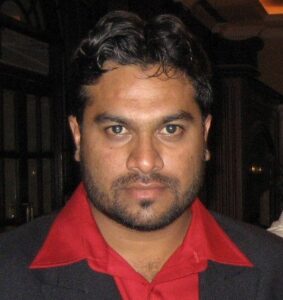
Dr. Syed Nabeel BDS, D.Orth, MFD RCS (Ireland), MFDS RCPS (Glasgow) MFDS RCS(Edin) , is a clinician-scholar whose career spans over two decades at the intersection of orthodontics, neuromuscular dentistry, and digitally integrated diagnostics. As Clinical Director of Smile Maker Clinics Pvt. Ltd., he has pioneered a philosophy of care rooted in anatomical precision, occlusal neurophysiology, and contemporary AI-enhanced workflows. A Diplomate in Orthodontics from Italy and an alumnus of advanced programs at Various International Universiteis , Dr. Nabeel brings a globally benchmarked clinical acumen to the nuanced management of temporomandibular disorders, esthetic rehabilitation, and algorithm-guided orthodontics.
In 2004, he founded DentistryUnited.com, a visionary platform connecting over 40,000 dental professionals through peer learning and collaborative dialogue. His academic drive led to the launch of Dental Follicle – The E-Journal of Dentistry (ISSN 2230-9489), a peer-reviewed initiative now indexed in EBSCO, fostering interdisciplinary scholarship across clinical domains.
A prolific educator, he has contributed to UGC and national broadcast media as a subject expert and regularly speaks at scientific forums, favoring small-group, discussion-based formats that emphasize clinical realism over theoretical abstraction. His ethos remains steadfast: knowledge, when shared freely, multiplies in value. Dr. Nabeel continues to shape the future of dentistry through research, mentorship, and his enduring commitment to elevating practice standards in India and beyond.