
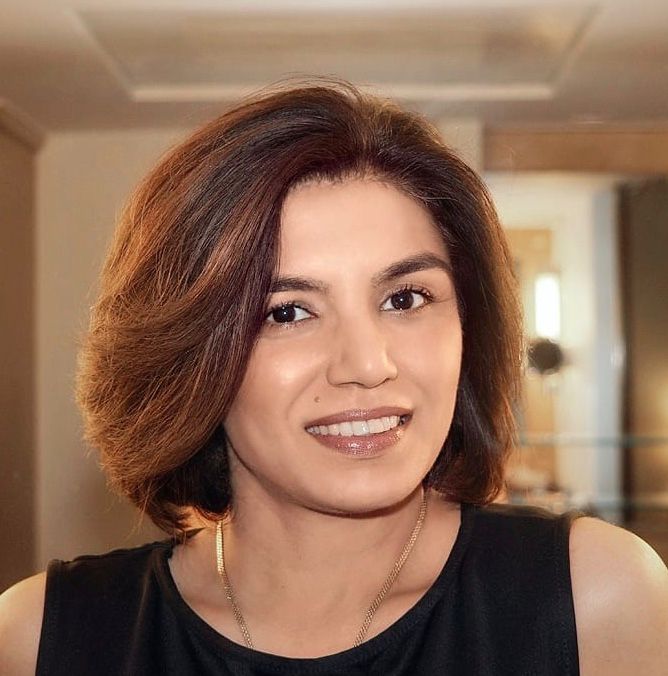
— A reflective dialogue between Dr Puja Khanna and Dr Syed Nabeel
Prologue: The Question That Sets the Tone
The morning had just begun to settle. The espresso, warm and familiar, carried with it a quiet sense of ritual.
I dialed Dr Puja Khanna.
She answered with a soft laugh. “Let me guess—espresso?”
“Always,” I said. “You sound like you’ve already started your day.”
“I have,” she replied. “And I have a question for you.”
I leaned back. “Go on.”
“How many dental colleges today can realistically deliver 300 to 350 outpatients a day in a rural setup?”
The question was direct. Clinical. Unembellished.
“Very few,” I said.
“Exactly,” she replied. “But we continue to expect it. On paper, everything looks perfect. On the ground, it rarely is.”
The Reality Beneath Numbers
“In many colleges,” she continued, “patient inflow is simply not enough. Geography decides that.”
“And yet,” I added, “evaluation systems assume uniformity.”
“Yes,” she said. “So numbers get… adjusted. Or interpreted.”
“Or quietly normalized,” I said.
She paused.
“Honestly, Nabeel, clinical exposure is becoming inconsistent.”
“It is,” I agreed. “But I think the deeper issue lies even before that.”
“Before clinical exposure?” she asked.
“Yes,” I said. “At the level of understanding.”
The Faculty’s Lens: Comprehension Before Competence
“I see this every day,” she said. “Students struggle with basic concepts.”
“Because of the Language of Medicine,” I replied.
“Partly,” she said. “They read, they memorize—but when you ask them to explain… there’s hesitation.”
“Because the language never became theirs,” I said. “It remained external.”
She continued, now more reflective.
“Take physiology, genetics, dental materials—these are not difficult subjects. But many students don’t grasp them. They remember fragments.”
“And yet,” I said, “they pass.”
“Yes,” she said quietly. “Almost everyone does.”
The Postgraduate Paradox
“And then they enter postgraduate programs,” she continued. “And something interesting happens.”
“They go back to undergraduate textbooks,” I said.
She paused. “Exactly. Not for revision—for recovery.”
“Which means,” I said, “postgraduate education becomes corrective instead of progressive.”
“And that affects confidence,” she added. “They hesitate with advanced literature, evidence-based approaches, even digital workflows.”
“Because the foundation was never fully built,” I said.
When the Gap Becomes Generational
“And some of them,” she said slowly, “eventually become faculty.”
I nodded.
“And then a student asks a question—and the answer is, ‘You should already know this.’”
“Yes,” I said. “Which is not teaching—it’s displacement.”
“It’s not intentional,” she said.
“No,” I agreed. “But it becomes systemic.”
The Language of the Clinic
“There’s another thing,” she added. “In clinics, we simplify too much.”
She paused, then said with a hint of amusement, “You know… ‘daant mein khadda banao aur masala lagao’.”
I smiled. “You’d be surprised—I hear the same line here in the South as well. Different cities, same language.”
She laughed. “Exactly.”
“It helps the patient,” I said. “But we don’t always bring it back to proper terminology.”
“And that’s the gap,” she replied. “They learn to do—but not always to articulate.”
“And that,” I added, “is where local comfort begins to drift away from global clarity.”
Confidence and Preparedness
“And then fresh graduates step out,” she continued.
“Confident,” I said.
“Very,” she replied. “Academies, aligner practices, independent clinics.”
“Ambition isn’t the issue,” I said.
“No,” she agreed. “Preparedness is.”
“As faculty,” she added, “we see both—the potential and the gaps.”
The Silent Minority
“And your top students?” I asked.
“They’re excellent,” she said. “Clinically sharp. Academically sound.”
“And yet?” I prompted.
“They don’t get a different pathway,” she said. “They move through the same system.”
“Which means excellence isn’t actively nurtured,” I said.
“It’s left to sustain itself,” she replied.
A Moment for Calibration
“With the National Dental Commission coming in,” she said, “this could be a turning point.”
“Yes,” I said. “If we treat it as calibration—not criticism.”
She paused. “Alright. Then let’s be clear. What do we fix first?”
Rebuilding the Foundation
“Language of Medicine,” I said. “Structured bridge modules in the early years. Students must learn how to read, think, and express clinical science.”
“That would help,” she said. “But clinical gaps will remain.”
“Then we address them directly,” I replied. “If patient volume is limited, we augment it—simulation labs, digital case repositories, AI-assisted learning.”
“Technology as support,” she said.
“Not as a substitute,” I added.
Faculty: The Fulcrum of Change
“Exactly,” I replied.
“And faculty?” she asked, almost immediately answering her own question. “That’s where we’ve been too lenient.”
I let her continue.
“We need mandatory faculty upskilling,” she said. “Not optional courses—but periodic, structured programs.”
I nodded. “With measurable outcomes?”
She looked at it more sharply. “Assessed.”
“Not just attendance,” I added. “Competency.”
“Yes,” she said. “Otherwise it becomes a formality.”
I leaned back slightly. “That will be difficult to implement.”
She held her ground. “So is stagnation.”
Creating Pathways for Excellence
“And your top 10 to 15 percent?” I asked.
“We need structured mentorship tracks,” she said. “Research exposure, advanced clinical pathways, global alignment.”
“So they don’t plateau,” I said.
“So they lead,” she replied.
The Non-Negotiable: Exit and Responsibility
She grew quieter.
“And independent practice?” I asked.
She didn’t hesitate.
“A standardized exit exam,” she said. “Focused on clinical judgment, procedural skill, and decision-making.”
I didn’t interrupt.
“And only then,” she continued, “should independent practice be permitted.”
I paused. “Even for postgraduates?”
“Yes,” she said, without hesitation. “Postgraduate education should enhance skill—not compensate for its absence.”
I nodded. “Then what you’re really proposing… is accountability at the point where responsibility begins.”
She replied quietly, “Exactly.”
The End Point Must Be Clear
There was a brief stillness before she spoke again.
“At the end of it all, the dentist must be globally competent.”
“Clinically sound,” I added.
“Scientifically articulate,” she continued.
“Ethically grounded,” I finished.
“And not dependent on technology to think,” she said.
“But capable of choosing it wisely,” I replied.
An Unspoken Transition
There was a pause before we disconnected—not the kind filled with words, but with something more deliberate.
Almost as an afterthought, yet carrying the weight of years, she said,
“I stepped down at the end of March.”
I didn’t interrupt.
“After all these years in academia,” she continued, “I felt it was time. For now, I’ll be in full-time private practice… grounding myself again in the chair, in patients, in the everyday rhythm of dentistry.”
There was no finality in her voice—only transition.
“And perhaps,” she added, almost quietly, “when the time is right… if there is a larger role to play—in academia, in shaping policy, in contributing to something more structured—I’ll return. But this time, with a clearer lens.”
It felt less like a departure, and more like a repositioning.
Because sometimes, to influence a system meaningfully, one must first step outside it… observe it… and then return, not as a participant alone, but as a contributor to its evolution.
As the call ended, the espresso had long gone cold.
But the conversation—like many that matter—had just begun.
Epilogue: Agreement Without Illusion
The conversation slowed, but its weight remained.
“So this isn’t about criticism,” she said.
“No,” I replied. “It’s about responsibility.”
“And rebuilding,” she added.
“One layer at a time,” I said.
There was a pause.
“And courage,” she said.
I looked at the empty espresso cup.
“Yes,” I said quietly. “Always that.”
The Reflection
This was never a conversation about what is wrong.
It was a conversation about what must be done.
Between a faculty member who sees the system from within…
And a clinician who sees what it must become.
Between two perspectives.
Two responsibilities.
And two cups of espresso.
Quietly acknowledging that systems do not fail overnight—but they can certainly be rebuilt, one honest reform at a time.
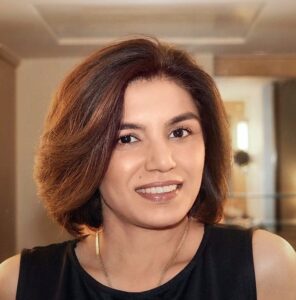
Dr. Puja Khanna is a distinguished dental professional whose academic and clinical journey reflects both depth and dedication. She completed her undergraduate training at Maulana Azad Medical College in 1995, followed by her postgraduate specialization from King George’s Medical College in 2000.
Blending academia with clinical excellence, she went on to serve as Professor and Head at JCD Dental College, Sirsa, a role she held with distinction until March 2026. Today, she devotes herself entirely to private practice, bringing with her decades of experience, refined clinical judgment, and a legacy of mentorship that continues to influence the next generation of dentists.
Dr. Syed Nabeel BDS, D.Orth, MFD RCS Ireland, MFDS RCPS Glasgow, MFDS RCS Edinburgh is a clinician-scholar with over two decades of experience spanning orthodontics, neuromuscular dentistry, and digital diagnostics. As Clinical Director of Smile Maker Clinics Pvt. Ltd., he practices a philosophy rooted in anatomical precision, occlusal neurophysiology, and AI-enhanced workflows.
With advanced international training, his clinical focus includes temporomandibular disorders, esthetic rehabilitation, and algorithm-guided orthodontics. He founded DentistryUnited.com in 2004, connecting 40,000+ dental professionals, and established Dental Follicle – The E-Journal of Dentistry (ISSN 2230-9489), indexed in EBSCO.
An active educator and speaker, he engages in academic and media platforms through discussion-driven, clinically grounded formats, guided by a steadfast belief in the power of shared knowledge.