
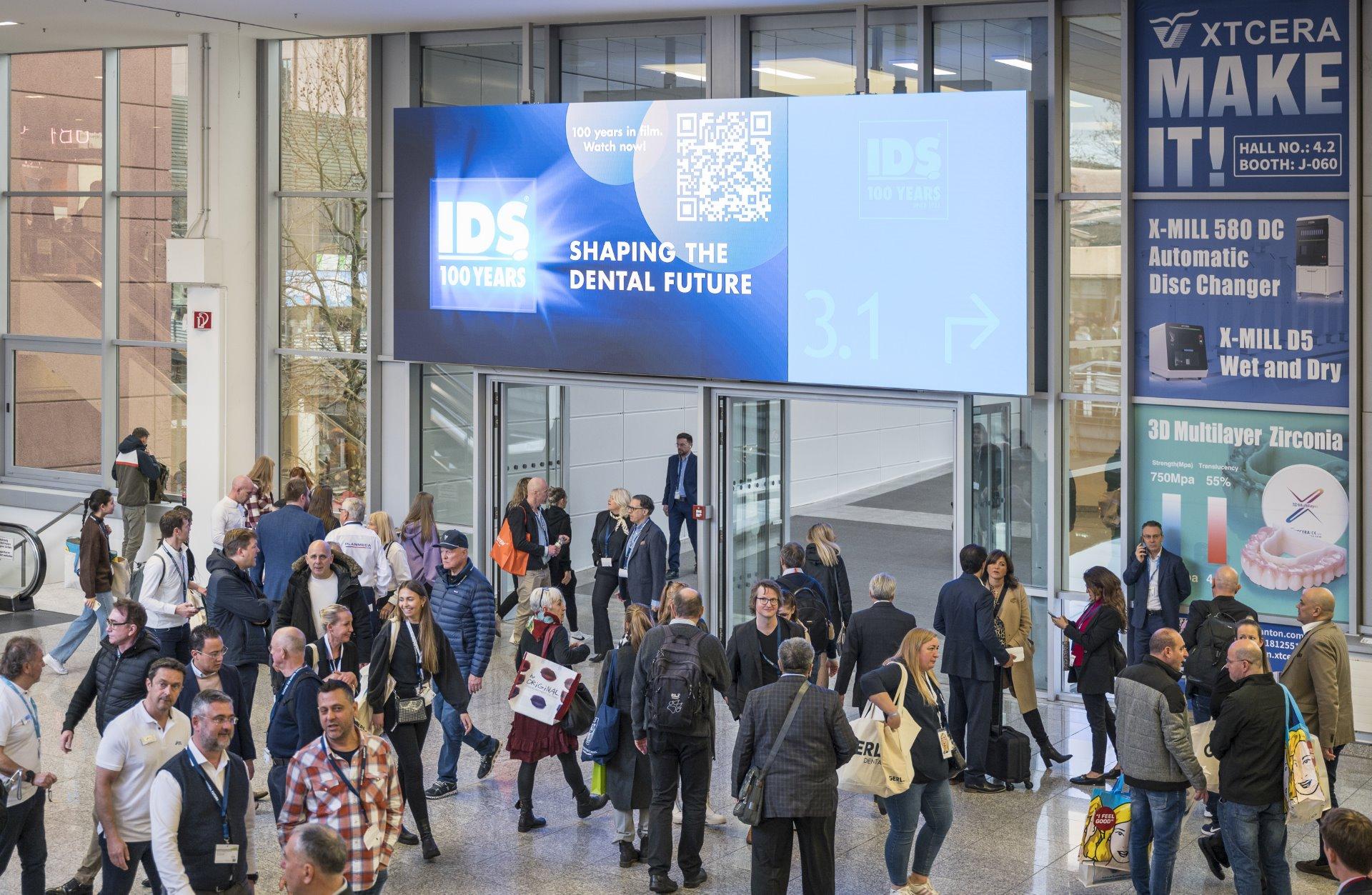
As IDS 2027 approaches, a look back at how technology has transformed not just the dental clinic, but the relationship between dentists, patients, laboratories and the wider healthcare ecosystem.
When I started Smile Maker in 2002, dentistry was a very different world.
Communication with dental laboratories was largely physical. Impressions were taken, packed and dispatched. Instructions were written down, sometimes accompanied by a sketch or a telephone conversation. If a laboratory technician wanted clarification, there was often a delay before the dentist and technician could speak again.
Digital communication between a clinic and a laboratory was not really part of our everyday vocabulary.
Even the materials we used tell a story of how far we have travelled. Alginate was an everyday material. Rubber-base impressions were considered an improvement, and moving towards them was itself a small milestone in clinical practice.
At the time, we thought we were simply upgrading our techniques.
We had no idea that we were at the beginning of a much larger transformation.
The first signs of a different dentistry
Then came CAD/CAM.
Computer-aided design and manufacturing gradually began changing how restorations were conceived and produced. What was once entirely dependent on conventional impressions, laboratory models and manual communication started moving towards digital workflows.
Intraoral scanning entered the conversation. Suddenly, the possibility of capturing a digital impression without the familiar trays and impression materials became real.
Software such as exocad brought another dimension to restorative dentistry. We could examine proposed designs, review restorations and communicate modifications before the final product reached the patient.
The laboratory was no longer simply a place that received an impression and returned a crown. It was becoming a digital collaborator.
Orthodontics, however, remained relatively traditional for many of us. Brackets were bonded, wires were engaged, adjustments were made and patients returned for their regular appointments. The fundamental workflow seemed unlikely to change dramatically.
Or so we thought.
2015: The scanner that looked like a dinosaur
I still remember seeing the FDI World Dental Congress in 2015, where 3Shape’s intraoral scanning technology caught my attention.
The scanner looked almost like a dinosaur!
It was unusual, perhaps even amusing, but it made me stop and think. There was something significant happening here. Dentistry was beginning to move beyond the conventional boundaries of clinical practice.
That scanner represented more than a new piece of equipment. It represented a different way of thinking about how we could capture, transfer and use clinical information.
In 2016, Invisalign entered the Indian market, bringing another dimension to the digital transformation of orthodontics.
For years, orthodontics had largely been associated with brackets, wires and mechanical adjustments. Now, digital treatment planning, virtual simulations and sequential aligner therapy were introducing patients and clinicians to an entirely different experience.
The change was gradual, but unmistakable.
The iPad moment: When showing a patient became an experience
I remember another small moment from around 2011.
I would show patients photographs of their own dental conditions and completed cases on my iPad 2. At that time, it felt almost revolutionary. A patient could see what I was explaining rather than simply imagine it.
I genuinely felt that I was doing something quite advanced!
Today, that experience would hardly surprise anyone.
Patients increasingly expect to see their scans, photographs, proposed treatment plans and even simulations of possible outcomes. Showing a photograph is no longer enough. They want to understand what is happening, what can be done and what the anticipated result might look like.
The patient is no longer merely receiving an explanation. The patient is becoming an active participant in the treatment journey.
This is perhaps one of the most important changes technology has brought to dentistry.
COVID-19: Two years that changed the direction of everything
Then came COVID-19.
For a profession built around close physical contact, the pandemic created extraordinary uncertainty. Clinics closed, reopened, adapted and struggled to find their footing. Nobody knew exactly what the next few months would bring.
The immediate concern was survival.
By 2022, many practices were trying to recover, rebuild patient confidence and return to a sustainable clinical routine. It was a period of getting back on our feet.
But dentistry was not returning to exactly where it had been.
Patients had become accustomed to digital communication in almost every other aspect of life. They were using apps, receiving updates, sharing documents and managing appointments through their phones.
Naturally, they began expecting similar experiences from their healthcare providers.
2023: The clinic begins to connect
At Smile Maker, 2023 became an important turning point in our adoption of digital dentistry.
We began moving more decisively towards digital workflows. Intraoral scanning, digital orthodontic planning and improved communication with laboratories and consultants started becoming increasingly relevant to our everyday work.
The conventional rubber-base impression, which had once represented an advancement, was gradually becoming less central in cases where digital scanning offered a suitable alternative.
The relationship between the dentist and the laboratory changed further.
Earlier, explaining a case to a laboratory technician meant writing instructions, making a telephone call or physically discussing the case. Later, we started sending photographs through WhatsApp.
Today, the conversation can involve complete digital records, intraoral scans, CBCT datasets, diagnostic images and links that allow consultants and specialists to examine the same clinical information remotely.
Think about that progression.
In 2002, we were trying to explain a clinical situation through a written prescription and a telephone call.
Today, a consultant sitting hundreds or thousands of kilometres away can review a digital diagnostic record and participate in the treatment-planning discussion.
The clinic is no longer an isolated clinical unit.
It is becoming part of a connected ecosystem.
The patient journey is changing faster than the equipment
Perhaps the most interesting development is that the transformation is no longer limited to equipment.
It is changing the entire patient journey.
Diagnostics are becoming more accessible. Digital records can be shared. Treatment simulations can improve communication. Patients increasingly expect continuity of information between appointments and providers.
Even the possibility of moving certain aspects of monitoring and preliminary assessment closer to the patient’s home is becoming part of the conversation.
This is particularly relevant as populations age. The dental profession must increasingly consider accessibility, mobility, communication and the specific needs of senior patients.
Technology must not simply make dentistry more sophisticated. It must make dentistry more accessible, understandable and convenient.
That distinction is important.
A technologically advanced clinic that cannot communicate effectively with its patients has missed the point.
Are we preparing dentists for the dentistry of tomorrow?
There is another development worth watching: the changing nature of dental education.
For generations, dental education has concentrated on developing clinical knowledge, manual dexterity and the ability to diagnose and treat disease. These remain fundamental.
But the modern dentist must also understand digital diagnostics, scanning, virtual treatment planning, digital laboratory communication, data management and increasingly interconnected clinical workflows.
Recent developments in Germany, including the growing emphasis on digital simulation and digitally integrated dental education, indicate how seriously institutions are beginning to approach this transition.
The question is no longer whether digital dentistry belongs in dental education. It is how comprehensively it should be integrated.
A student entering dental school today may graduate into a clinical environment very different from the one in which many of their teachers began practising.
That is an extraordinary responsibility for dental educators.
IDS 2027: Looking beyond the next machine
This brings us to IDS 2027.
The message emerging from the ATLAS DENTAL 2025, published by GFDI, is particularly interesting. Dentistry is moving from a predominantly dentist-centred treatment model towards a more patient-centred journey, with diagnostics increasingly extending beyond the traditional boundaries of the dental clinic.
At the same time, demographic change is creating new demands for accessible, senior-friendly care and better communication.
These are not simply technology trends. They are changes in the way dental care itself is organised.
IDS 2027 offers an opportunity to explore the technologies, platforms and companies shaping this connected dental practice. The important developments may not necessarily be the newest scanners or the most sophisticated machines.
They may be the solutions that allow different parts of the dental ecosystem to communicate seamlessly.
The future clinic will need to connect the dentist, patient, laboratory, specialist, diagnostic centre and, increasingly, the patient’s home.
Looking back, looking forward
When I look back at Smile Maker in 2002, I remember alginate impressions, rubber-base materials, laboratory prescriptions, telephone calls and the early days of explaining treatment with photographs.
I remember the excitement of showing patients their cases on an iPad.
I remember seeing that unusual scanner in 2015 and wondering where dentistry was heading.
And I look at where we are today: digital impressions, virtual treatment planning, CBCT data sharing, remote consultations and patients who expect to participate in decisions about their treatment.
None of these developments arrived overnight.
We adapted one step at a time, often without appreciating the magnitude of the changes taking place around us.
Perhaps that is how revolutions happen in clinical practice. Not always through one dramatic invention, but through hundreds of small changes that eventually transform everything.
The future of dentistry will not be defined by how many digital devices a clinic owns. It will be defined by how intelligently those technologies work together to improve patient care.
And perhaps the most important question for every dentist today is not simply, What new technology should I buy?
It is:
How connected is my practice becoming?
— Dr. Syed Nabeel
Founder, Smile Maker Clinics
Founder, DentistryUnited.com
 Dr Syed Nabeel, BDS, D.Orth, MFD RCS (Ireland), MFDS RCPS (Glasgow), MFDS RCS (Edinburgh) is a dental surgeon, clinician and founder of Smile Maker Clinics, Mysuru, with over 25 years of experience in clinical dentistry. His professional interests span orthodontics, restorative dentistry, occlusion, temporomandibular disorders and the evolving relationship between clinical practice and technology.
Since establishing Smile Maker in 2002, he has witnessed dentistry move from conventional impressions, laboratory prescriptions and telephone-based communication to digitally connected clinical workflows. His own journey through this transformation has included the adoption of digital diagnostics, intraoral scanning, CAD/CAM workflows, digital treatment planning and technology-assisted patient communication.
He is also the founder of DentistryUnited.com, an international professional platform established in 2004 to connect dental professionals through education, clinical knowledge and exchange of ideas. He has been involved in dental publishing since 2006 as Editor-in-Chief of The Dental Follicle, and continues to explore how digital platforms, artificial intelligence and emerging technologies can contribute to dental education and clinical practice.
In this article, Dr Nabeel reflects on more than two decades of change in dentistry—from the analogue routines of 2002 to the connected, digitally enabled dental environment taking shape today—and looks ahead to the technologies and ideas that will define the next chapter of the profession at IDS 2027 in Cologne.